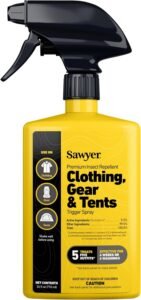
Sawyer Products Premium Permethrin Insect Repellent for Clothing, Gear & Tents works as a fabric-bound barrier that helps cut down tick and insect contact in high-friction trail zones. I focus on socks, cuffs, gaiters, and pack straps. Those spots see the most brush contact in tick-heavy sections and the most touch points in buggy camps.
Key takeaways
- Targets high-contact points: socks, boots, gaiters, pant cuffs, waistlines, hat brims, and pack straps to reduce crawling hitchhikers and bites.
- Longer-lasting treatment: permethrin binds to fabric fibers and can stay effective for up to 6 weeks or 6 washings; sweat and light rain usually won’t strip it fast.
- Study support for ground-level gear: a cited 2017 University of Rhode Island study found treated shoes and socks reduced the likelihood of a tick bite by 73.6 times, so I treat ground-level gear first.
- Broad insect coverage: covers 55+ insects, including ticks, mosquitoes, chiggers, mites, and spiders, and can be used on tents, netting, and sleeping gear after it dries fully.
- Odor and application notes: “unscented” reactions vary; apply a light, even coat and let items dry out of direct sun to cut lingering odor and avoid gear issues.
No products found.
Real-World Effectiveness on Ticks and Bugs
I see the clearest payoff after I treat clothing before heading into tick-heavy brush or a buggy campsite. Reports stay consistent: fewer bites, fewer crawling hitchhikers, and less time spent checking socks and cuffs. I treat pants, gaiters, shirts, and pack straps, then let everything dry fully so the protection lasts through real trail abuse.
What I treat and why it works
I focus on contact points where pests climb and linger:
- Socks, boots, and gaiters to stop ticks early.
- Pants legs, waistline, and cuffs for brush contact.
- Shirts and hat brims for flies and mosquitoes.
- Pack hip belts and shoulder straps for constant rubbing.
For a DEET-free perimeter, I pair it with this Thermacell option. Check current pricing and availability at Amazon here!
Sawyer Products Premium Permethrin Insect Repellent for Clothing, Gear & Tents
 This image is property of Amazon.com.
Long-Lasting Fabric Treatment
Permethrin binds to fabric fibers and keeps working for up to 6 weeks or through 6 washings, whichever comes first. I like it for shirts, pants, socks, and packs because it keeps biting insects off my gear without adding a skin-applied layer. Sweat and light rain won’t knock it out fast, so I can hike, fish, or work outside with consistent coverage.
How I keep it effective
I get better results when I follow a few habits:
- Dry treated items out of direct sun since UV light breaks permethrin down.
- Wash gently and skip heavy agitation that strips fibers and reduces hold.
- Pair fabric treatment with a zone repeller on camp nights; my pick is the Thermacell Backpacker Gen 2.
Check current pricing and availability at Amazon here!
Sawyer Products Premium Permethrin Insect Repellent for Clothing, Gear & Tents
This image is property of Amazon.com.
Tick-Bite Reduction Statistic
I treat my shoes and socks first because the biggest gains often come from simple steps at ground level. A 2017 University of Rhode Island study found that treating shoes and socks can reduce the likelihood of a tick bite by 73.6 times. I treat that figure as a practical benchmark: if I’m going to spend time on any tick strategy, I start there.
How I apply this on real trips
I keep the routine tight so I’ll actually do it before busy weekends. These steps work for quick day hikes and longer overnights:
- I treat hiking shoes, sock cuffs, and the lower legs of gaiters, since ticks latch low and climb.
- I let items dry fully before wearing or packing them, so protection lasts and the finish doesn’t feel tacky.
- I re-treat on a schedule that matches heavy use, rain, and repeated washing, because abrasion strips coverage faster than most people expect.
- I pair clothing treatment with smart camp habits and add a non-spray option for mosquitoes, like the Thermacell Backpacker Gen 2, to stay consistent from trailhead to tent.
Check current pricing and availability at Amazon here!
Sawyer Products Premium Permethrin Insect Repellent for Clothing, Gear & Tents
 This image is property of Amazon.com.
Broad Pest Coverage for Outdoor Gear
I treat permethrin as my go-to barrier for kit because it hits broad targets without leaving my skin greasy. The formula works against 55+ kinds of insects, including ticks linked to Lyme and mosquitoes associated with West Nile, Zika, and Chikungunya. I also count on it for chiggers, spiders, mites, and other nuisance crawlers that love cuffs, waistbands, and tent corners.
Where I apply it for real trips
I stick to fabrics and gear, then let everything dry fully before packing. Here’s where it pays off most:
- Shirts and pants, with extra focus on cuffs, waist, and collar
- Socks plus shoes/boots, since ticks often start low
- Sleeping bags and liners to reduce nighttime bites
- Tents, netting, and camp chairs for a wider comfort zone
I keep it off skin and avoid treating items that won’t air out well. For a complementary bite-free setup at camp, I pair treated clothing with a small zone repeller; I’ve compared options in my Thermacell Backpacker Gen 2 guide.
Check current pricing and availability at Amazon here!
Sawyer Products Premium Permethrin Insect Repellent for Clothing, Gear & Tents
 This image is property of Amazon.com.
Unscented and Material-Safe Claims (Odor Feedback Mixed)
I treat unscented as no added fragrance, not no odor. This repellent markets itself as fragrance-free, yet real-world feedback splits. Some people pick up almost nothing after it dries, while others notice a chemical or oily note that lingers on hands or cuffs. I’ve found application method matters. A light, even mist and a short dry time usually keeps the smell low. Heavy sprays tend to amplify it.
The brand also claims it won’t stain or damage clothing, fabrics, plastics, finished surfaces, or outdoor gear. That’s a strong promise, so I still act like a cautious gear nerd. Sun lotions, fabric softeners, and dyed synthetics can react in weird ways, even with “material-safe” products. I’ll always test a hidden spot on technical jackets, printed leggings, and watch bands before committing.
How I keep odor low and gear clean
I stick to a few habits that reduce complaints and protect expensive kit:
Spray outdoors and let it dry fully before getting in a car or tent.
Use short bursts, then rub in with clean hands to avoid pooling.
Keep it off sunglasses, camera grips, and glossy plastics unless I’ve spot-tested.
Wash hands after applying, especially before eating or handling cookware.
For a DEET-free alternative zone approach, I pair it with Thermacell Backpacker Gen 2 at camp.
Check current pricing and availability at Amazon here!
Sawyer Products Premium Permethrin Insect Repellent for Clothing, Gear & Tents
 This image is property of Amazon.com.
Application Experience and Value
I like the 24-oz trigger spray because it covers a lot of clothing fast and keeps the per-outfit cost low. I can lay items flat, spray evenly, and let them dry fully before packing. For a wider, DEET-free setup around camp, I pair it with my notes on the Thermacell Backpacker Gen 2.
Sprayer reliability in real use
A few habits help me avoid frustration with inconsistent pumps:
- Test-spray into a rag before starting an outfit.
- Keep the nozzle clean and store it upright.
- Decant into a known-good bottle if the trigger gets weak or sticks.
Check current pricing and availability at Amazon here!
Sawyer Products Premium Permethrin Insect Repellent for Clothing, Gear & Tents
 This image is property of Amazon.com.
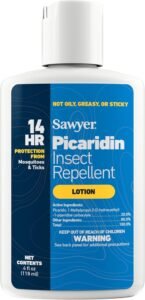
Pro Tip: Pair With Skin Repellent
I treat clothing and gear with permethrin, then I cover exposed skin with Sawyer Picaridin. That combo closes the gaps permethrin can’t cover, like hands, neck, and face. I keep the workflow simple: permethrin on fabric, picaridin on skin, and I reapply based on my sweat and water exposure.
How I layer protection in the field
I stick to a repeatable routine so I don’t miss spots:
- I apply picaridin to exposed skin right before I step onto the trail, then I wash my hands so I don’t rub it into my eyes.
- I hit high-bite zones first: ankles, behind knees, wrists, and along my shirt collar.
- I treat socks, pant cuffs, and pack straps with permethrin ahead of time, since ticks love brush contact points.
- I add a non-spray option for windy ridgelines so I can apply cleanly without wasting product.
For camp comfort, I sometimes add a small “mosquito bubble” layer with a Thermacell Backpacker Gen 2 zone, especially during dusk cooking and dish cleanup.
Check current pricing and availability at Amazon here!
Disclosure: As an Amazon Associate, I earn from qualifying purchases.

From Bozeman, Montana. Former outdoor guide who distrusts ultralight gear claims. Reviews based on real trips, bad weather, and exhaustion.