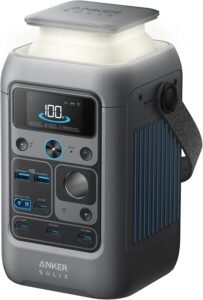
The Anker SOLIX C300 DC is a compact, DC-first 288Wh portable power station that I’d reach for when I want USB-C Power Delivery as the main event. It pairs a 300W output with a travel-friendly ~6.16 lb build for camping, road trips, and short emergency backup. I like the focus on fast USB-C 140W two-way charging, LiFePO4 longevity, and flexible solar/car recharging. Setup needs a little forethought, since Anker doesn’t include a wall charger and first-time activation requires the right USB-C port and enough charger wattage.
Key takeaways
- 288Wh capacity and 300W output in a small footprint (~4.89 × 7.87 × 4.72 in) make it a grab-and-go pick for essentials.
- USB-C-first layout with two 140W PD 3.1 two-way ports speeds up laptop charging and cuts recharge time (around 80% in ~1 hour with dual USB-C).
- Seven total ports support mixed kits (several USB-C, USB-A, plus a 120W car socket) for modern travel and camping gear.
- LiFePO4 cells, thermal control, a tough shell, and a 3-year guarantee help it hold up for frequent use and emergency storage.
- No wall charger included; first activation needs an 18W+ USB-C charger and I must plug into USB-C2 or USB-C3. Solar support works best with specific 60W–100W panels, so I plan my panel choice ahead of time.
Compact, Travel-Friendly Power That Charges Fast
I like how the Anker SOLIX C300 DC balances size and output. A 288Wh battery and 300W output cover essentials without hauling a brick. At about 6.16 lbs and roughly 4.89 x 7.87 x 4.72 inches, it stows cleanly in a trunk or camp bin. I treat it as my grab-and-go option for camping, road trips, and short outage backup. I’ve also seen users report it can run gear like a Starlink Mini, which fits the “small but capable” theme.
How I size it against similar options
Here’s how I think about alternatives and fit:
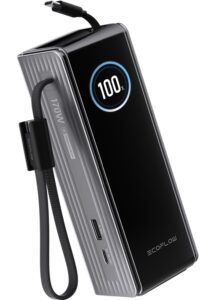
- Go smaller: high-output power bank for laptops and phones.
- Go bigger: compact power station class peers.
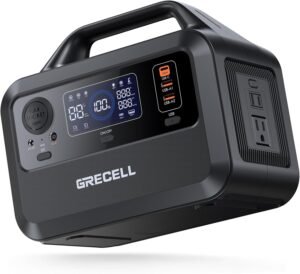
- Go LiFePO4: 300W LiFePO4 station for cycle-focused buyers.
- Decode ratings: read the fine print before buying.
Check current pricing and availability at Amazon here!
Anker SOLIX C300 DC Power Bank Station, Outdoor 288Wh Portable Power Station, LiFePO4 Battery, 300W Solar Generator, for Camping, Traveling, and Emergencies (No Wall Charger Included)

This image is property of Amazon.com.
Fast USB-C Performance and Lots of Ports (With One Caveat)
I like how this setup puts USB‑C first. Two 140W two‑way USB‑C ports with PD 3.1 handle fast laptop charging and fast pack recharging. That means I can run a MacBook-class load, then flip the same port to refill the bank quickly once I’m back at an outlet. Port selection also feels practical for mixed kits, from camera batteries to a small 12V appliance.
Port layout and real-world pairing
Here’s how I think about the 7 ports in actual use:
- 2× USB‑C (140W): primary laptop/tablet ports, plus fastest recharging
- 1× USB‑C (100W): second laptop port or a high-draw USB‑C hub
- 1× USB‑C (15W): phones, lights, GPS, or low-power gadgets
- 2× USB‑A (12W): older cables, earbuds, headlamps
- 1× car socket (120W): 12V coolers, inflators, or DC adapters
For comparing specs across brands, I rely on how to read the fine print, then cross-check against options like the Anker Prime 300W or the EcoFlow River 2 when I need AC power.
The caveat: no wall charger, and activation needs planning
No wall charger comes in the box. First-time activation needs an 18W+ USB‑C wall charger, and I must plug it into USB‑C2 or USB‑C3 only. I pack a known-good charger before any first trip to avoid dead-on-arrival stress.
Check current pricing and availability at Amazon here!
Anker SOLIX C300 DC Power Bank Station, Outdoor 288Wh Portable Power Station, LiFePO4 Battery, 300W Solar Generator, for Camping, Traveling, and Emergencies (No Wall Charger Included)
This image is property of Amazon.com.
Battery Longevity and Durability Advantages
I like this unit’s LiFePO4 chemistry for long service life and steadier performance across frequent charge cycles. Smart temperature control helps keep heat in check during heavy loads, so I can run gear longer without stressing the pack. The impact-resistant housing also matters in real travel, where drops and vibrations happen.
Why it holds up in daily use
A few practical traits make it a strong reliability pick:
- LiFePO4 cells for long-term cycle durability and safer operation
- Temperature management that protects performance in hot or cold conditions
- Rugged build that resists bumps in vehicles, camps, and garages
- 3-year guarantee that adds confidence for emergency-prep kits
I also cross-shop options like the Grecell 300W LiFePO4 station and keep expectations realistic by checking power bank fine print. Check current pricing and availability at Amazon here!
Anker SOLIX C300 DC Power Bank Station, Outdoor 288Wh Portable Power Station, LiFePO4 Battery, 300W Solar Generator, for Camping, Traveling, and Emergencies (No Wall Charger Included)

This image is property of Amazon.com.
Solar and Recharge Flexibility for Off-Grid Use
I keep this unit flexible by mixing wall, car, and solar recharging. Dual USB-C means I can top it up fast, and the dual PD 3.1 setup can hit about 80% in roughly 1 hour. I also like having car charging as a steady fallback for road trips.
Solar input: what works and what doesn’t
For solar, I treat 100W as the sweet spot. I stick with an Anker 100W or 60W panel, since compatibility matters. I avoid Anker SOLIX PS30 and other 5V~3A USB-C panels, plus PS200 and PS400, because they won’t work here. I also sanity-check specs using power bank fine print before I pack. For longer off-grid stays, I pair it with an EcoFlow River 2.
Check current pricing and availability at Amazon here!
Anker SOLIX C300 DC Power Bank Station, Outdoor 288Wh Portable Power Station, LiFePO4 Battery, 300W Solar Generator, for Camping, Traveling, and Emergencies (No Wall Charger Included)

This image is property of Amazon.com.
What to Know Before Buying
This DC-first, ultra-portable power station makes the most sense when my kit leans on USB-C Power Delivery. I can run and recharge phones, tablets, laptops, travel routers, camera batteries, and other modern USB-C gear without hauling an inverter-heavy box. Compact size also means it fits better in daypacks, car gloveboxes, or a work bag for commute-ready backup power.
Buying checkpoints I always verify
A few quick checks keep expectations aligned before I buy:
- Plan for charging gear: I’ll likely need a separate wall charger to activate the unit and recharge at full speed, so I budget for a quality USB-C PD charger and cable.
- Know what “fast” means: I confirm the port’s rated wattage and match it to my laptop’s intake, then cross-check real usable capacity; I use how to read the fine print as my sanity check.
- Choose the right size class: For a tiny carry, I compare with Anker Prime 20,100mAh or the bigger Anker Prime 26,250mAh.
- Step up when I need outlets: If I want a compact power station feel, I look at EcoFlow River 2 or Grecell 300W LiFePO4.
Check current pricing and availability at Amazon here!
Anker SOLIX C300 DC Power Bank Station, Outdoor 288Wh Portable Power Station, LiFePO4 Battery, 300W Solar Generator, for Camping, Traveling, and Emergencies (No Wall Charger Included)

This image is property of Amazon.com.
Disclosure: As an Amazon Associate, I earn from qualifying purchases.

From San Jose, California. Former IT support lead who has seen unspeakable things plugged into USB ports. Reviews electronics with zero patience for bad firmware.